
A water bill that keeps climbing, a meter that won’t stop moving or a warm spot on the floor can all point to a hidden leak. Beacon Plumbing AZ provides leak detection and repair across the Phoenix metro — we find the source, explain your options and give you an upfront price before any work begins.
Leaks rarely show up where they start. Geo has more than 12 years of hands-on plumbing experience and works through your system step by step, so you only pay to fix the real problem.
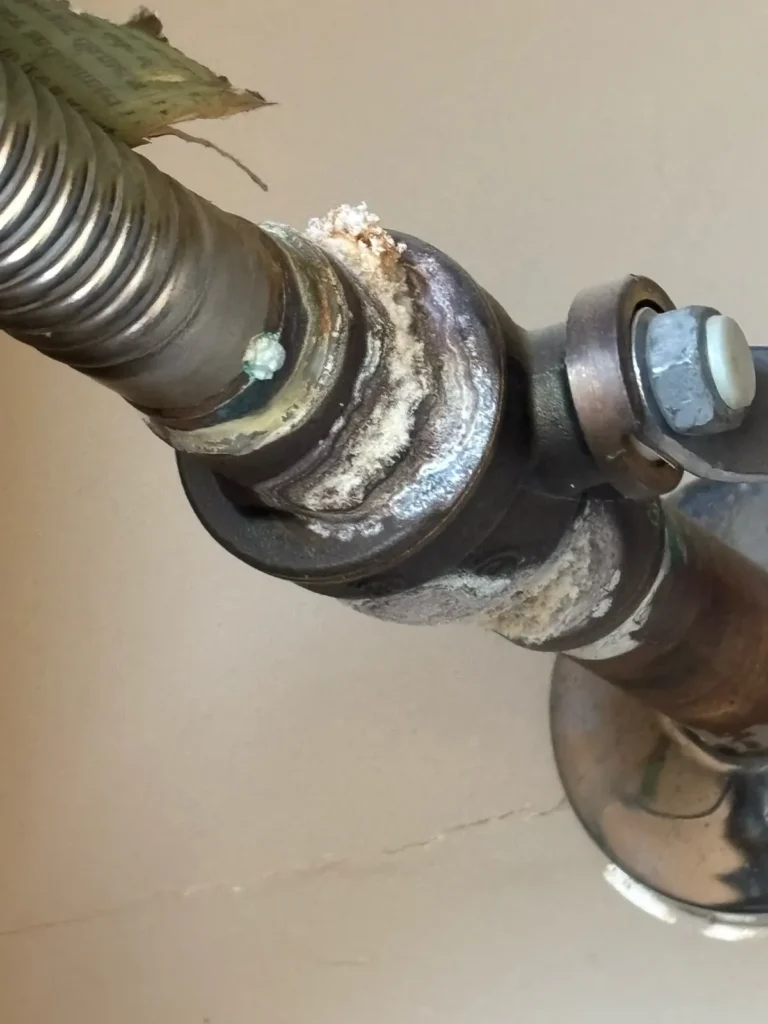
Signs of a hidden leak
- A water bill that jumps for no clear reason
- The sound of running water when everything is turned off
- A water meter that keeps moving with all water off
- Damp spots, stains or bubbling paint on walls or ceilings
- A warm spot on the floor — a possible hot-water slab leak
- Damp carpet, lifting tile or warped wood flooring
- A musty smell or mildew in one part of the house
- A toilet that runs or refills on its own
- Lower water pressure than usual
Try the meter test first
Your water meter is the simplest leak detector you have. These steps follow the City of Chandler’s official leak-check guidance:
- Turn off all water use inside and out, including the ice maker, irrigation controller, automatic pool filler and evaporative cooler.
- Find the meter box, usually near the sidewalk out front. Lift the lid carefully — critters like to hide inside.
- Read the meter. On a digital meter, watch the flow rate for at least 10 flashes; anything above zero means water is flowing. On a dial meter, watch the leak indicator, or note the sweep hand and check again after 10 minutes.
- Narrow it down. If it’s moving, close your home’s main shut-off (often near the front hose bib). Still moving? The leak is likely on the service line to the house. If it stops, the leak is inside your plumbing.
Test toilets too: add 2 or 3 drops of food coloring to the tank and wait 15 to 30 minutes without flushing. Color in the bowl means a leaking flapper. If the meter moves and you can’t find why, call us.
Slab leaks in Valley homes
Many Valley homes are built on a concrete slab with water lines running underneath. When one of those lines leaks, the water may soak into the soil, push up through the flooring or show up only on your bill.
A hot-water slab leak often shows up as a warm spot on the floor or a water heater that never seems to rest. Cold-side leaks are quieter, which is why the meter test matters.
How our leak detection works
Good leak detection is a systematic process of elimination, with as little disruption to your home as possible.
- Start with the clues: what you’ve noticed, your water bills and a meter check.
- Isolate: shut off and test fixtures, appliances, the water heater and hot and cold lines to narrow down where water is going.
- Pinpoint: locate the leak as closely as possible before any wall or floor is opened.
- Explain: a plain-English rundown of what we found and an upfront price for each repair option.
Leaks we find and fix
Hidden & slab leaks
Leaks under the slab, inside walls and behind cabinets, found and then repaired or rerouted.
Pipe & fitting leaks
Pinhole leaks, corroded fittings and failed connections on water lines.
Service line & main valve
Leaks between the meter and your house, and main shut-off valves that drip or won’t close.
Running toilets
Worn flappers, fill valves and seals that quietly add to your bill.
Faucets, valves & supply lines
Dripping faucets, leaking shut-off valves and aging supply lines under sinks and toilets.
Water heater & appliance leaks
Leaks at the water heater, its connectors and relief-valve line, plus ice maker and washer hookups.
Spot repair, reroute or repipe?
Spot repair opens the area right at the leak to fix the damaged section. It’s often simplest when the rest of the pipe is in good shape, but under a slab it means opening concrete and flooring at that spot.
A reroute runs a new line through the walls or attic to bypass the leaking section, leaving your floors alone.
A repipe makes sense when pipes have leaked repeatedly or show widespread corrosion, and chasing leaks would cost more over time. See pipe repair and whole-home repiping.
You’ll get an upfront price for each option and an honest recommendation. We never push a repipe when a simple repair will do.
Leak facts and free help from Valley cities
The EPA’s WaterSense program says the average household’s leaks can waste more than 9,300 gallons a year, and 9 percent of homes have leaks wasting 50 gallons or more a day. Fixing easy leaks can save about 10 percent on water bills.
- Phoenix: the Smart Home Water Guide, from the Arizona Municipal Water Users Association, is free to download or order.
- Chandler: Water Conservation offers a free water audit.
- Scottsdale: customers can request a free Outdoor Water Efficiency Check, and the WaterSmart portal sends leak alerts to those with hourly water data.
Sources: EPA WaterSense; City of Chandler; City of Phoenix; AMWUA; City of Scottsdale.
Water coming through a ceiling or floor?
Close your home’s main water shut-off right away. If water is near outlets or the electrical panel, keep clear and don’t touch anything electrical while standing in water. Then call us — our line always answers.
Leak detection questions
How do I know if I have a slab leak?
Clues include a warm spot on the floor, running-water sounds when nothing is on, damp or lifting flooring and a meter that moves with all water off. Other leaks can cause the same symptoms, so a proper diagnosis comes first.
Will you have to tear up my floors or walls?
We narrow down the leak before anything is opened, so any access is as small as possible. If a repair needs access to the pipe, we’ll show you where and why first, and discuss rerouting if that’s less disruptive.
Is a leak between the meter and my house my responsibility?
Usually, yes. The City of Chandler, for example, says leaks after the meter on private property are the homeowner’s responsibility. If water is leaking at the meter itself, contact your city’s water department first.
Do you repair the leak once you find it?
Yes. From a toilet flapper to a slab-leak reroute, we can usually handle the repair too, with an upfront price before any work begins.
Related services
We find and fix leaks throughout the Phoenix metro, including Phoenix, Scottsdale, Tempe, Mesa, Chandler, Gilbert, Glendale, Peoria and the rest of the Valley.