
No hot water, a tank that’s leaking or rumbling, or a heater that just can’t keep up? We repair, replace and install tank and tankless water heaters across the Phoenix metro — with a clear, upfront price before any work begins.
Valley water is hard on water heaters. Minerals settle in the tank, coat heating elements and burners, and quietly shorten the life of the unit. Geo has more than 12 years of hands-on plumbing experience, and he’ll tell you honestly whether a repair makes sense or whether your money is better spent on a replacement — and never push you toward a bigger job than you need.
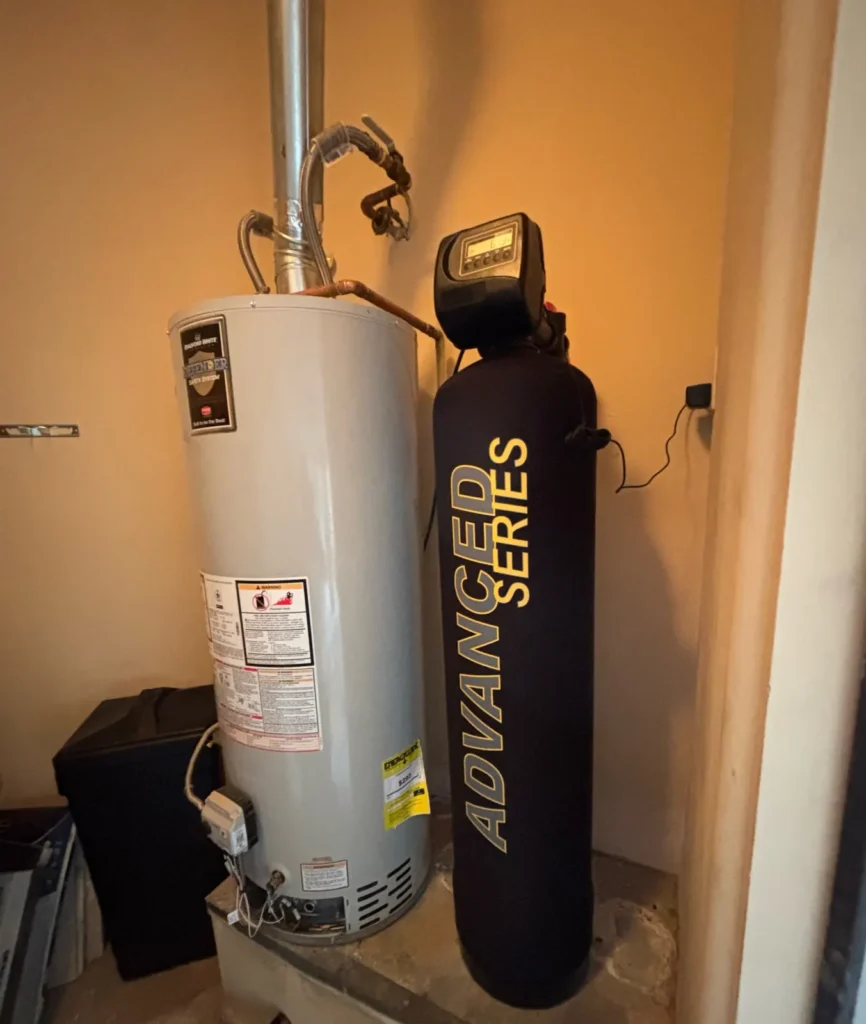
Signs your water heater needs attention
- No hot water, or it runs out much faster than it used to
- Popping, rumbling or crackling sounds from the tank
- Water pooling around the base, or a dripping relief valve
- Rusty or discolored hot water
- A pilot light that won’t stay lit, or a tripped breaker on an electric unit
- Corrosion or white crust on the fittings and connectors
- Water that’s too hot, not hot enough, or swings between the two
- A tank that’s 10 or more years old
Water heater services we provide
Repairs
Thermocouples, gas valves, igniters, heating elements, thermostats, relief valves and leaking connections on gas and electric tanks.
Replacement & installation
Right-sized tank water heaters installed with new connectors, shut-off valve and code-required safety components — and the old unit hauled away.
Tankless water heaters
Upgrades, installation and descaling service for tankless units — which need regular flushing to stay efficient on hard Valley water.
Flushing & maintenance
Draining sediment, checking the anode rod and testing the relief valve to help your heater run quieter, safer and longer.
Safety & code updates
Expansion tanks, drain pans, venting and relief-valve discharge lines checked and corrected so your system is safe.
Honest repair-or-replace advice
We look at the age, condition and cost of the fix and give you a straight answer — even when the answer is “it’s got years left.”
Why water heaters wear out faster in the Valley
The City of Phoenix reports tap water hardness of roughly 10 to 17.6 grains per gallon — well into the “very hard” range. As that water is heated, minerals drop out and settle as scale and sediment in the bottom of the tank.
- Lower efficiency: in a study for the Water Quality Research Foundation, water heaters running on hard water lost up to 24% of their efficiency.
- Noise and overheating: sediment traps heat at the bottom of gas tanks, which causes the popping sound many Valley homeowners hear.
- Shorter life: regular flushing — and a water softener on very hard water — helps protect both tank and tankless units.
Sources: City of Phoenix 2025 Water Quality Report; Battelle study for the Water Quality Research Foundation (WWD summary).
Tank or tankless?
Both are good choices in the right home. A tank water heater costs less up front and is simple to replace. A tankless water heater heats water on demand, takes up far less space and can last longer — but it needs proper gas or electrical capacity and regular descaling on hard water. We’ll look at your household’s hot-water use, your existing gas line and venting, and your budget, then lay out the options side by side.
Water heater leaking right now?
Turn off the cold-water valve on top of the heater, then turn the gas valve to “off” (gas) or switch off the breaker (electric). Then call us — our line always answers.
Water heater questions
How long does a water heater last in Phoenix?
The U.S. Department of Energy puts the typical life of a tank water heater at about 10 to 15 years, and ENERGY STAR estimates around 20 years for a whole-home gas tankless unit. Very hard water and skipped maintenance can shorten both. Age alone isn’t the whole story, though — we’ll check the actual condition before recommending anything.
Should I repair or replace my water heater?
If the tank itself is leaking, it needs to be replaced. Most other problems — a bad thermocouple, igniter, element, thermostat or valve — can usually be repaired. We’ll give you an upfront price for each option and an honest recommendation.
How often should I flush my water heater?
On hard Valley water, flushing a tank about once a year helps limit sediment buildup. Tankless units need periodic descaling too — check your manufacturer’s schedule, or we can take care of it for you.
What temperature should my water heater be set to?
For most homes, about 120°F is a good balance of comfort, safety and efficiency. Higher settings increase the risk of scalding and speed up scale buildup.
Do you remove the old water heater?
Yes. When we replace a water heater, we disconnect, remove and haul away the old unit as part of the job.
Related services
We install and repair water heaters throughout the Phoenix metro, including Phoenix, Scottsdale, Mesa, Chandler, Gilbert and the rest of the Valley.