
A pipe that leaks, rattles, runs rusty water or has been patched twice is telling you something. We repair leaking, corroded and failing water lines across the Phoenix metro — from one bad joint to a whole-home repipe in Phoenix and the surrounding Valley when that’s truly the right call.
At Beacon Plumbing AZ, you work directly with Geo, who has more than 12 years of hands-on plumbing experience. He’ll show you what he finds, explain your options and give you an upfront price before any work begins.
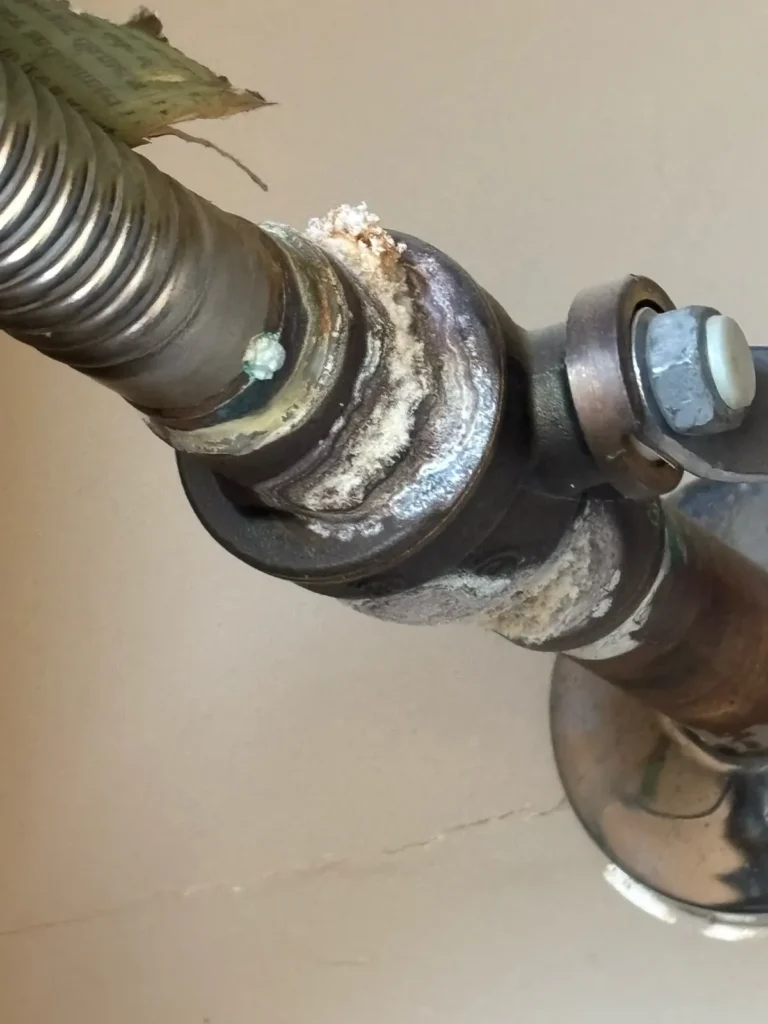
Signs your pipes need attention
- Water stains, bubbling paint or soft drywall
- A water bill that jumps for no clear reason
- Low water pressure at most faucets
- Rusty or discolored water, especially after it sits
- Pinhole leaks or crusty fittings on copper pipe
- Banging or rattling when a faucet opens or closes
- A dripping hose bib or a wet spot by the outside shut-off
- Gray plastic supply pipes, or leak after leak
Can’t find the source? Hidden leaks behind walls or under the slab call for leak detection first.
Pipe repair services we provide
Leak & burst pipe repair
Cracked, split or pinholed sections replaced and leaking joints remade on copper, PEX and galvanized lines.
Partial repipes
Replacing one problem run, like a failing hot-water line, without redoing the whole house.
Whole-home repiping
New PEX or copper lines to every fixture, planned to keep wall openings small.
Hose bibs & outdoor piping
Leaking spigots and weathered exposed lines rebuilt with new pipe and fittings.
Shut-off valves
Stuck or leaking main and fixture shut-offs replaced, so the water really turns off.
Noisy pipe fixes
Loose pipes secured and the cause of banging or water hammer tracked down.
Valley water and your pipes
The City of Phoenix reports tap water hardness of roughly 10 to 17.6 grains per gallon and notes that hard water can cause scaling in pipes and on fixtures. That’s why a dripping fitting often leaves a crusty white trail.
- Polybutylene is still around: builders installed it in millions of U.S. homes from 1978 to 1995, and Valley plumbers still find it. In Arizona it’s usually gray.
- Small leaks add up: EPA WaterSense estimates the average household’s leaks waste more than 9,300 gallons of water a year.
Sources: City of Phoenix 2025 Water Quality Report; ABC15 Arizona on polybutylene pipe; EPA WaterSense Fix a Leak Week.
When a repipe makes sense for a Phoenix home
For most leaks, a good repair is the right answer. A repipe makes sense when the pipes themselves are the problem:
- Repeated leaks: leaks in different spots usually mean the system is wearing out, not one joint.
- Polybutylene: replacing it on your schedule beats patching it one leak at a time.
- Old galvanized steel: it corrodes from the inside, narrowing the pipe and causing low pressure and discolored water.
- Recurring pinholes in copper: one pinhole is a repair; several in different places often point to the whole run.
We’ll identify your pipe material, check your water pressure and see where leaks have happened, then recommend a repair, partial repipe or whole-home repipe — never a bigger job than you need.
PEX or copper: an honest comparison
Both are proven supply-line materials, and both perform well when they’re installed correctly.
PEX
Flexible tubing that pulls through walls and attics in long runs with fewer fittings, which usually means fewer, smaller wall openings and a lower cost. It won’t corrode like metal pipe. Trade-offs: it must be kept out of direct sunlight and depends on quality fittings and careful installation.
Copper
Rigid metal pipe with a long track record. It handles heat well, holds up exposed outdoors and is recyclable. Trade-offs: higher material and labor cost, more joints, usually more access openings, and pinhole leaks under some water conditions.
Some homes do best with a mix: PEX inside, copper where pipe is exposed outdoors. We’ll lay out both and let you choose.
What a whole-home repipe involves
- Walkthrough and plan. We map every fixture, find your main shut-off and agree on material, route and an upfront price.
- Access. Floors and furnishings are covered. Many Valley homes sit on concrete slabs, so new lines often run through the attic and down inside walls, with openings kept as small and few as practical.
- New lines and valves. Each fixture gets a new supply line, with new shut-offs where needed.
- Testing. The system is pressure-tested, flushed and checked for leaks before walls are closed.
- Patching. Before we start, you’ll know where each opening goes, how it will be closed and what finish work to expect.
Timing depends on the home’s size, number of bathrooms and material, so you’ll get a realistic schedule at the walkthrough — including when the water will be off.
Hose bibs and outdoor pipes
Outdoor plumbing in the Valley takes a beating from sun, heat and hard-water crust, and a dripping hose bib wastes water and keeps the soil beside your house wet.
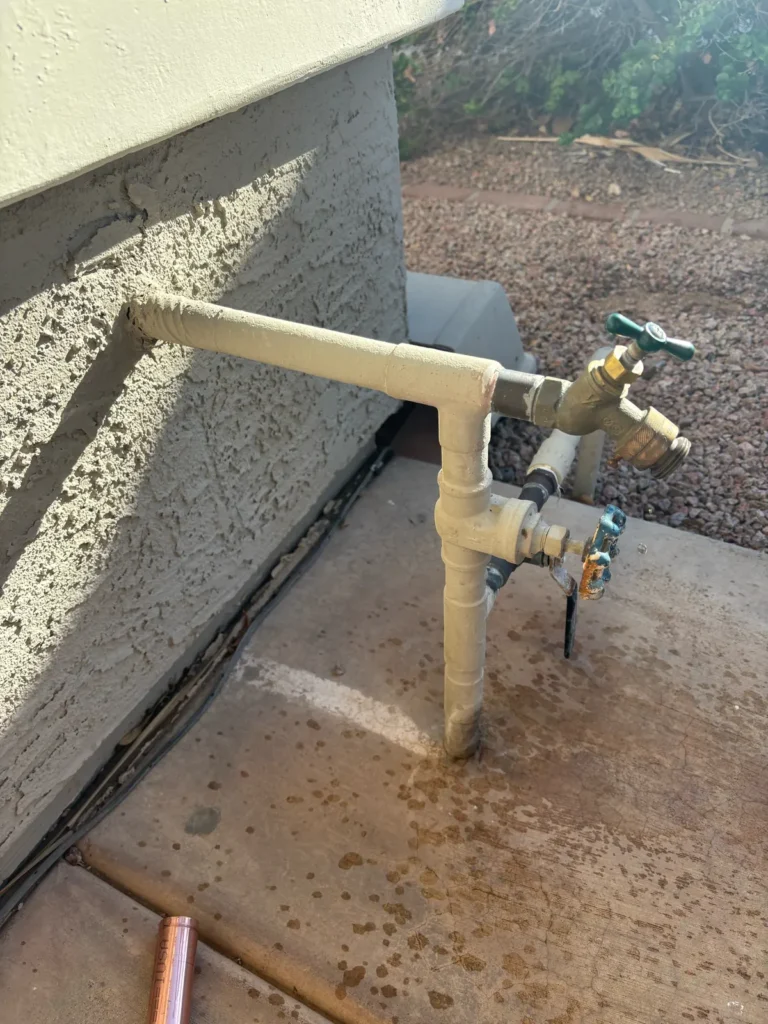
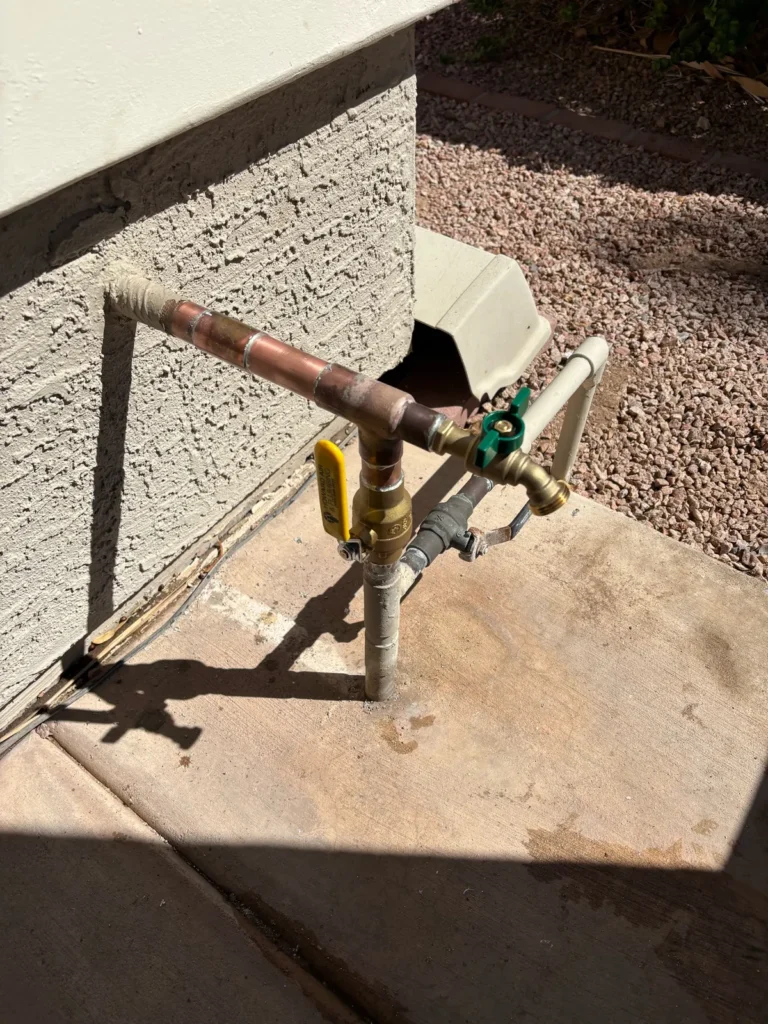
On the job shown here, a leaking hose bib and shut-off on painted pipe were rebuilt with new copper and a brass ball valve. If the line feeding a spigot is corroded, we replace that section too.
Hose bib & shut-off valve repair
Pipe burst? Shut off the water first
Turn off your main water shut-off right away. Look where the main line enters the house — often on an outside wall near a hose bib, or in the garage. Then open a cold faucet to drain the lines.
Stay clear of water near outlets or appliances, and only touch a breaker if you can stay dry. Then call us — our line always answers. Our shut-off guide shows what to look for.
Pipe repair and repiping questions
Should I repair the pipe or repipe the whole house?
If it’s your first leak and the rest of the plumbing is sound, repair it. If leaks keep showing up in new places, or you have polybutylene or failing galvanized pipe, a repipe is worth pricing out. We’ll walk you through both options.
How do I know if I have polybutylene pipes?
Polybutylene was installed in homes from 1978 to 1995. In Arizona it’s usually gray plastic, sometimes with copper crimp rings. Check near the water heater or in the attic above it — or we can identify it for you.
Why is my tap water brown or rusty?
Rusty water only from the hot side often points to the water heater. In both hot and cold, especially in an older home, corroding galvanized pipe is a common cause. If it keeps coming back, have it checked.
Why do my pipes bang when I shut off a faucet?
Usually it’s water hammer, a pressure surge when moving water stops suddenly, or a loose pipe knocking against framing. High water pressure makes it worse; we’ll check yours and find the cause.
Related services
We repair pipes and repipe homes throughout the Phoenix metro, including Phoenix, Tempe, Mesa, Glendale, Peoria, Queen Creek and the rest of the Valley.