
Pipes that bang when the washer shuts off, a toilet that runs all night, a hose bib that won’t stop dripping — that’s where most plumbing repair in Phoenix starts. Beacon Plumbing AZ fixes these everyday problems with a clear, upfront price before any work begins.
Many small problems share a few culprits: pressure that’s too high, a worn-out valve, or hard Valley water scaling up the parts. Geo has more than 12 years of hands-on plumbing experience. He’ll find the cause, explain your options and recommend only what your home needs.
Signs you need a plumbing repair
- Pipes that bang or shudder when a faucet or appliance shuts off
- A toilet that keeps running or refills on its own
- A dripping relief valve on the water heater
- Pressure that suddenly drops, or blasts out of every tap
- A leaking irrigation backflow device or outdoor hose bib
- Stuck or mineral-crusted shut-off valves under sinks and toilets
Plumbing repair services for Phoenix-area homes
Pressure regulators (PRVs)
We test your water pressure, then adjust, repair or replace the regulator on your main line.
Backflow preventers
Cracked or corroded irrigation backflow devices and vacuum breakers replaced to protect your drinking water.
Hose bibs
Dripping or broken outdoor spigots repaired or replaced, with the valve and fittings behind them.
Angle stops & shut-off valves
Seized or leaking valves under sinks and toilets swapped for new valves and supply lines that actually close.
Running toilets & small leaks
Worn flappers, fill valves and seals replaced, and drips at fittings and connections fixed.
Water hammer & expansion tanks
Banging pipes quieted at the source, and failed or missing expansion tanks replaced.
Why water pressure matters
When pressure runs too high, every faucet, toilet valve, washer hose and water heater works harder than it was built to. The result: banging pipes, running toilets, a dripping relief valve and fixtures that wear out early.
A pressure regulator (pressure-reducing valve, or PRV) sits on the main line where water enters your home and steps city pressure down. Like any valve it wears out, and hard Valley water can make it stick. We check your pressure with a gauge, look at the regulator and expansion tank together, and tell you plainly whether an adjustment, repair or replacement makes sense.
Water pressure in the Valley: what the numbers say
Phoenix Water Services considers 40 to 100 psi an acceptable range in the city’s system — and it doesn’t regulate pressure on your side of the meter.
- The code limit: Phoenix’s plumbing code requires a pressure-reducing valve wherever static pressure in a building exceeds 80 psi.
- A gentler target: the EPA WaterSense home specification calls for no more than 60 psi static, for fewer leaks and less waste.
- Who owns it: the city says private pressure regulators are the homeowner’s responsibility.
- Expansion control: a tank water heater fed through a regulator, check valve or backflow preventer needs a thermal expansion device, usually an expansion tank.
Sources: City of Phoenix Water Services; Phoenix Plumbing Code (IPC 2018), sections 604.8 and 607.3; U.S. DOE Building America Solution Center.
Irrigation backflow preventers
Your sprinklers share a water supply with your kitchen tap. A backflow preventer — often a brass pressure vacuum breaker near the irrigation valves — keeps water that has sat in those lines, with any soil or fertilizer it picked up, from being pulled back into your drinking water.
Desert sun and hard water are rough on these devices: bonnets crack, seals wear and corroded bodies start to spray. The plumbing code specifies which device types are allowed on lawn irrigation, so we replace yours with the right type and make sure it seals.
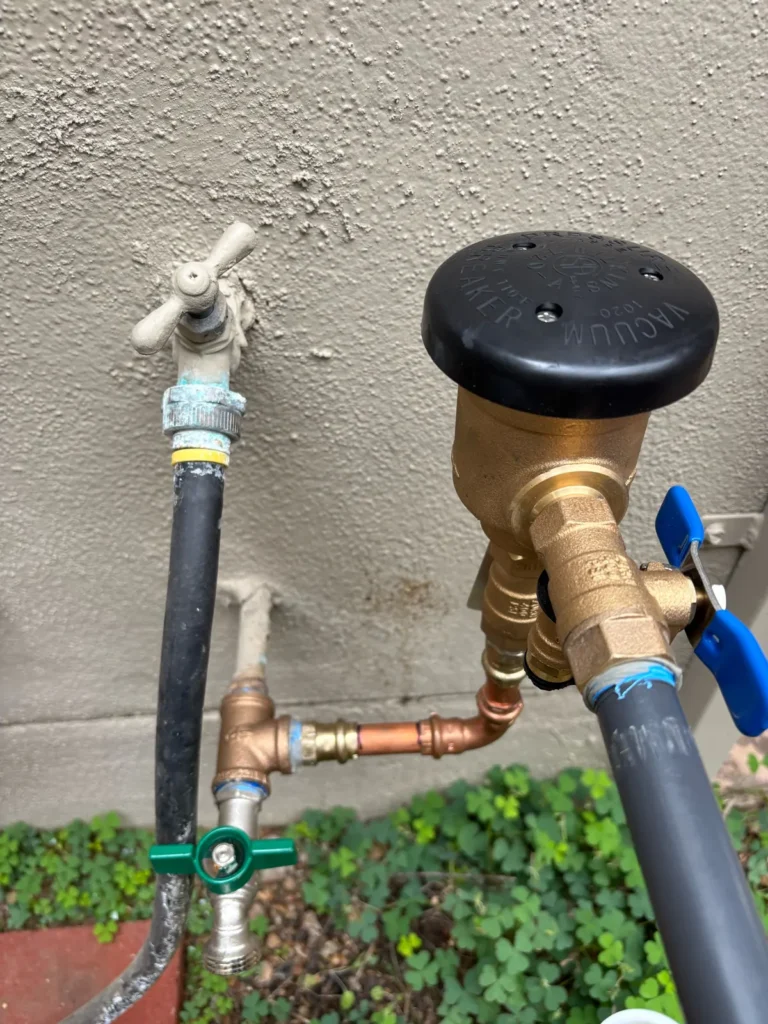
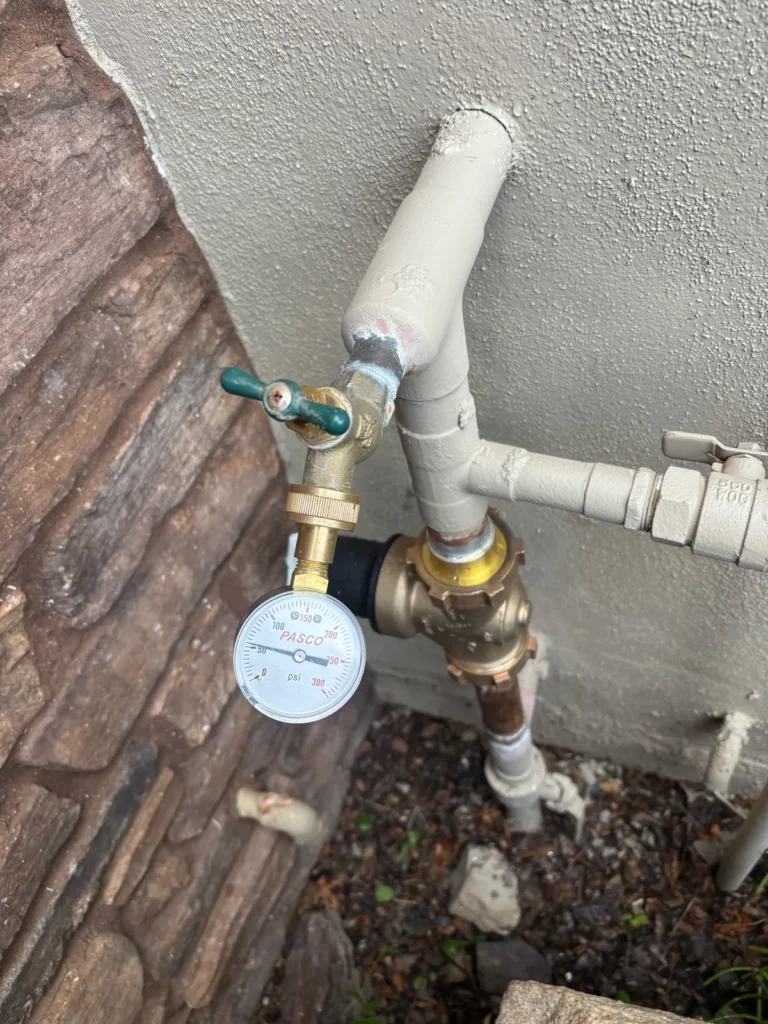
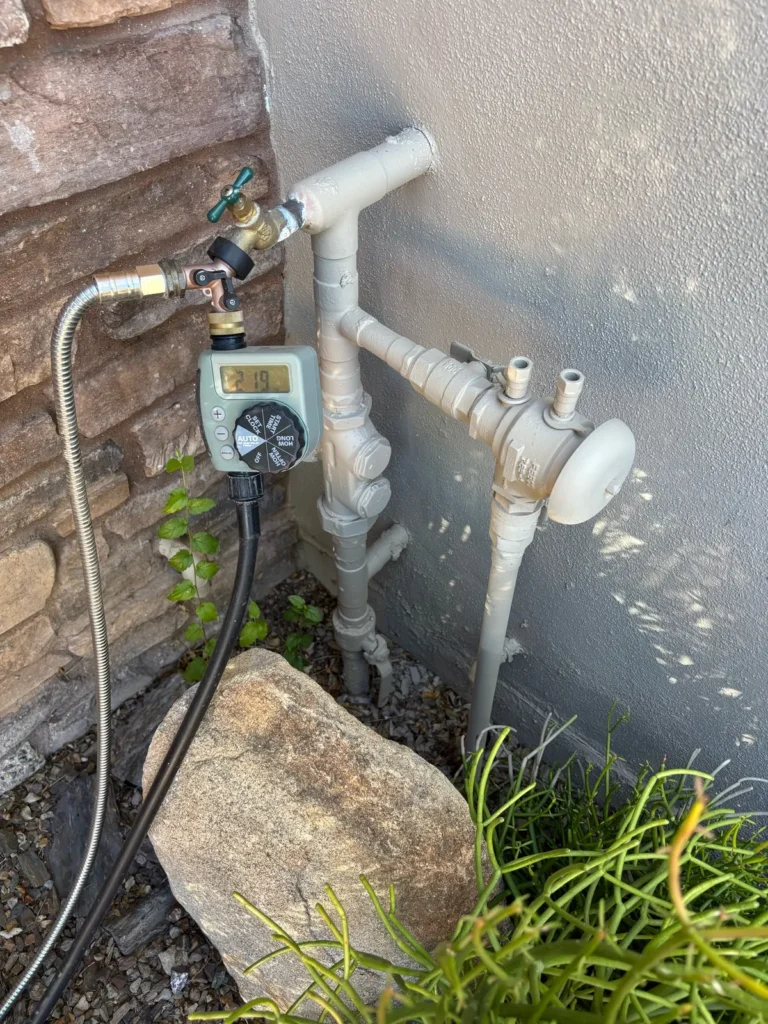
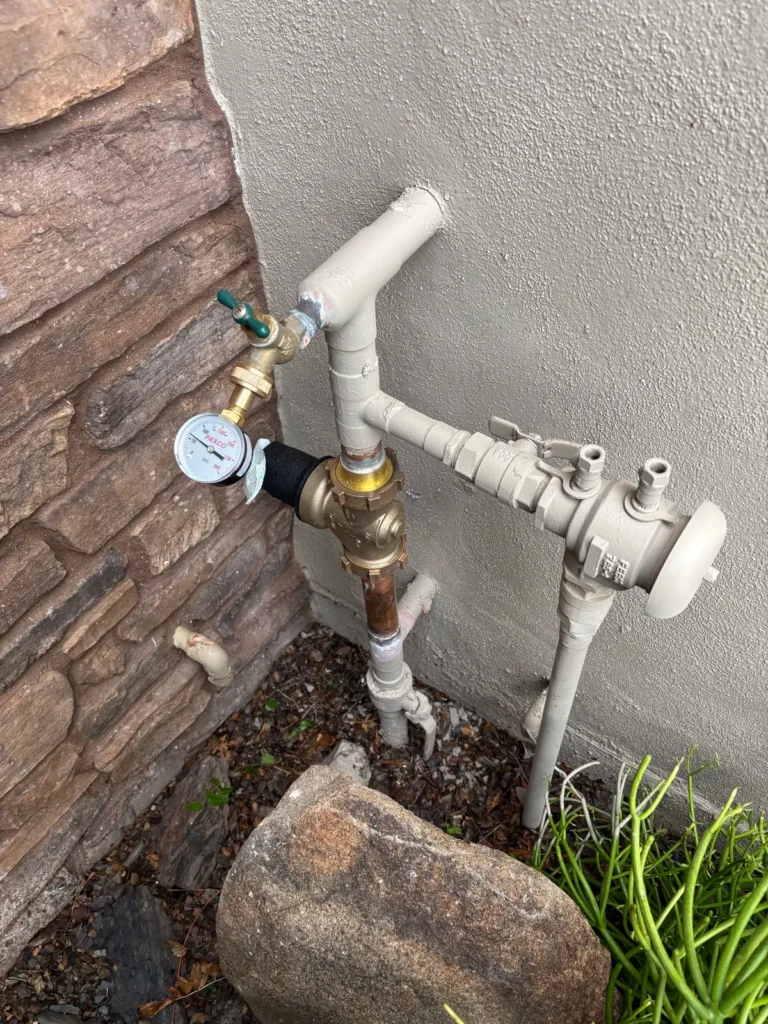
Before and after: recent repairs
Pressure regulator replacement
Irrigation backflow preventer replacement
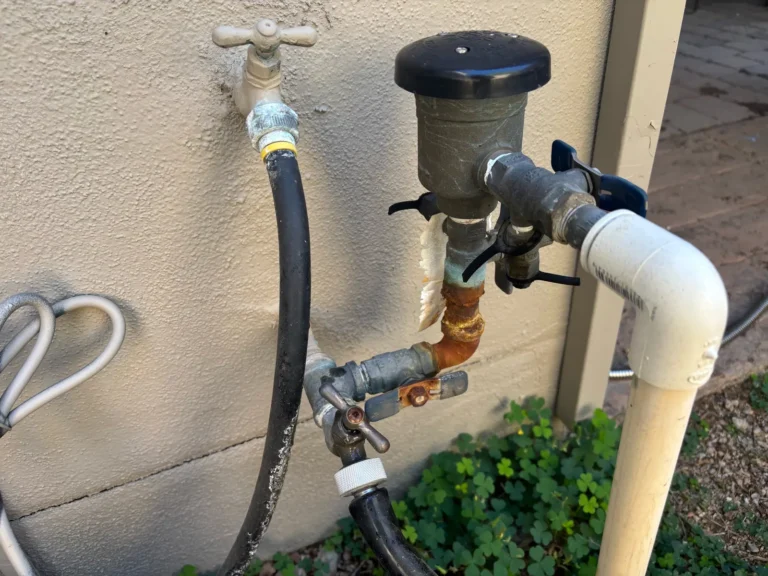
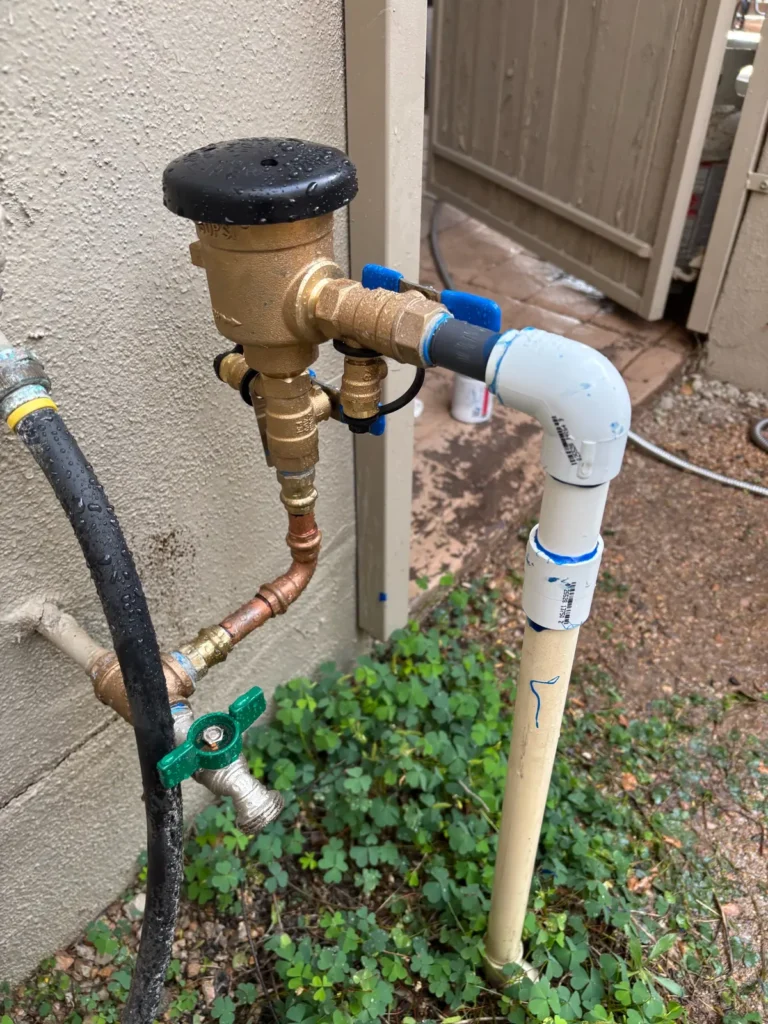
Real jobs, not stock photos. See more on our work page.
Other everyday repairs
Hose bibs and shut-off valves
Hose bibs bake in the sun, and the angle stops under sinks and toilets often sit untouched for years. In hard water, both can seize or leak the moment you turn them. Working valves let you shut off one fixture in an emergency instead of the whole house. For new faucets and toilets, see fixtures & faucets.
Noisy pipes and water hammer
That bang when the washer shuts off is water hammer: a pressure wave slamming through the pipes. High pressure, loose pipe straps and quick-closing valves are the usual causes. The fix may be lowering pressure, securing pipes or adding water hammer arrestors.
Running toilets and small leaks
EPA’s WaterSense program warns that a worn toilet flapper can silently leak thousands of gallons a year, and that the average household’s leaks can waste more than 9,300 gallons a year. For leaks you can’t see, try leak detection.
Source: U.S. EPA WaterSense, Fix a Leak Week.
Water spraying, or a relief valve gushing?
Shut off your main water valve first (our shut-off guide shows how). If a water heater relief valve is gushing, also turn the heater’s gas valve to “off” or switch off its breaker, and never cap or plug that valve — it’s a safety device. Then call us — our line always answers.
How we handle repairs
You get a clear, upfront price before work starts. If there’s more than one sensible fix, we lay out the options and you choose. A portion of the proceeds also goes to the Beacon Care Fund, which helps local families who can’t afford an essential plumbing repair.
Plumbing repair questions
What should my home’s water pressure be?
Code requires a pressure-reducing valve above 80 psi static, and the EPA WaterSense home specification targets 60 psi or less. We’ll help you find a setting with good flow that doesn’t strain your fixtures.
How do I know if my pressure regulator has failed?
Watch for banging pipes, a running toilet, a dripping relief valve, or pressure that has changed throughout the house. A gauge on a hose bib tells the story, and we’ll explain what the reading means.
Do I need an expansion tank?
If your tank water heater is fed through a pressure regulator, check valve or backflow preventer, code calls for thermal expansion control, usually an expansion tank. Tanks fail too, so we check yours whenever we test pressure.
Why is my irrigation backflow preventer leaking?
Usually a cracked bonnet, worn seals or a corroded body. Sometimes a rebuild is enough; on older, corroded devices, replacement is often the better value. We’ll tell you which, and why.
Can you fix several small problems in one visit?
Yes, and it’s often the smartest approach. List the drips, sticky valves and noises you’ve noticed, and we’ll give you an upfront price for each so you can decide what to tackle now.
Related services
We handle everyday plumbing repairs throughout the Phoenix metro, including Phoenix, Tempe, Mesa, Chandler, Glendale, Peoria and the rest of the Valley.